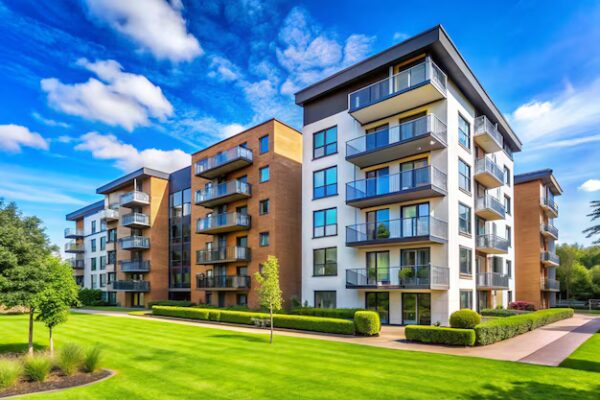
Buying a flat or apartment
In addition to all the things you would consider when buying a freehold house, you should also consider the following carefully if you are buying a leasehold flat or apartment:-
How much is the ‘Ground rent’?
This can vary from £25 to £250 a year or (much) more!
(The government has said it plans to limit ground rents to £250 from 2028 – promises, promises?).
How much is the ‘Service charge’?
This is the amount paid into a ‘common fund’ to pay for the maintenance of the block of flats or building, the grounds, parking areas and of course the cost of the insurance.
Older or listed buildings, buildings with lifts or extensive grounds will obviously be more expensive to maintain and so the ‘Service charge’ will therefore be much higher.
The same will be the case for modern apartment buildings with leisure facilities or a concierge service.
Is the level of service charge adequate to maintain the block or building?
Ask your surveyor to advise if necessary.
If the service charge is inadequate then, when essential repairs are required, you will be asked to pay an additional lump sum to make up the shortfall.
In addition, if the maintenance is not kept up, the building will begin to look ‘tatty’ or even fall into disrepair. The flats or apartments will then decrease in value and likely be harder to sell.
Who is the owner of the freehold of the flats (‘the Landlord’)?
A company whose members are the flat owners is ideal as they will (collectively through the company) have total control of the management – how much is spent on maintenance, repair, renewals etc.
On the other hand, the freehold owner might be an investment company who will naturally be looking to make a profit. It may appoint a professional management company (often associated with or the same as the freehold owner!) who may charge high ‘administration fees’. (This is often the case even though the Law says such fees must be ‘reasonable’).
A professional management company is more likely to be appointed to manage a large block of flats and indeed, this is probably preferable.
Subject to certain conditions, the law provides a (collective) Right to buy the freehold of the block (sometimes called enfranchisement) and also a Right to manage the flats. However there will obviously be the cost of the purchase and legal fees for any application.
How long is the lease?
This is obviously VERY IMPORTANT. Most leases are granted for 999 years or (modern) leases for at least 125 years. However, some older leases were only granted for 99 years and now have insufficient years left to run.
They are ‘insufficient’ because most mortgage lenders require a minimum of 85 years left to run.
If the lease of the flat you are buying has only around 85 years or less to run, then the lease will need to be extended.
There is a right for the seller to do this under the recent Leasehold Reform and Freehold Act 2024 to extend the lease. This will be to 990 years from the original commencement date.
Leases with more than 80 years left, will cost less to extend than leases with LESS than 80 years left to run so ‘Time is of the essence!’
(If you need to extend the lease of your flat – e.g. because you purchased a lease with say 87 years left to run but there is now only 83 years left; then we thoroughly recommend you seek the advice of the Leasehold Advisory Service who have a very useful guide and experiance second to none!)
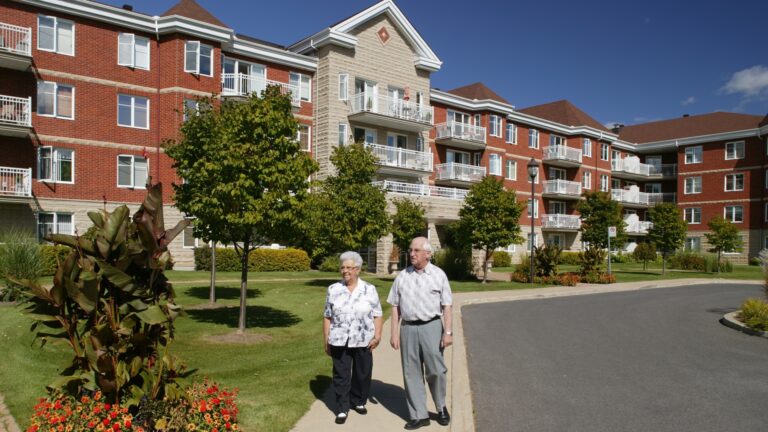
Retirement apartments
Retirement flats or apartments have additional things to consider. They will have a minimum age restriction of course. They will usually have a resident manager or ‘warden’. The service charge will naturally therefore be higher to cover the cost of this service.
The management will be taken care of by a professional company with again associated higher service charges.
When you sell, you may have to pay a high administration fee and almost always a ‘Transfer fee’. This is typically 1% of the sale price but I have seen as much as 5%!!
NOTE – some retirement property companies charged a 1% ‘Transfer fee’ AND a 1% ‘contingent fee’ but a recent case has declared this illegal, so you should only pay one fee.
‘Freehold flats’
Clients often rang me and told me ‘I’m buying a freehold flat’.
99 times out of a 100, they were NOT buying a ‘freehold flat’. They were in fact buying a leasehold flat where the freehold was owned by the flat owners (or by a company whose shareholders were the flat owners).
I believe this is the ideal way of owning a leasehold flat, as collectively, the flat owners are in control of the maintenance and level of service charges etc. They can also grant lease extensions at nominal cost e.g. just the legal costs.
An actual ‘Freehold flat’ is literally, a flat but which is freehold instead of leasehold.
This is not such a good thing (!) because there are legal difficulties with enforcing payment of the service charge, if a flat is a ‘freehold flat’ instead of the usual leasehold.
‘Freehold flats’ are therefore rare and sometimes difficult to sell. They may therefore be bit less expensive than the equivalent leasehold flat in the same area.
They are certainly more difficult to mortgage, so employ the services of a local independent financial advisor to find a lender who will lend for the purchase of a ‘freehold flat’.
Although there are blocks of freehold flats that are managed very well and are popular, consider carefully before you buy and definitely seek your local conveyancer’s advice.
‘Criss –cross’ leasehold flats (or cross-over scheme flats)
These are quite common in areas such as Bristol and the North.
It is a strange arrangement but seems to work well and most lenders are happy to lend on such flats.
Typically a house has been converted into two flats or there are two purpose built ‘maisonettes’. (Let’s call them ‘1A’ and 1B’).
The owners of 1A and 1B, will each hold a lease of their respective flats and this ‘Leasehold Title’ will be registered at the Land Registry.
In addition though, they will each own the freehold of the other flat. So the owner of 1A will own the leasehold flat 1A AND the freehold title of 1B.
The owner of 1B, will own his or her leasehold flat 1B AND the freehold title of 1A.
(This is in contrast to the usual situation, where there would be one freehold title of the whole building which would be jointly owned by the owners of 1A and 1B).
Strange but as I said, they seem to work well and most lenders seem happy to lend on such properties.actual