Things to consider when looking for a home
Of course when you are looking, there may be limited properties on the market in the area you need to be and within your budget.
However, let’s hope that when you are looking, you are ‘spoilt for choice’. How do you narrow down the list of properties available?
FIRST, draw up a list and divide it into ‘Must have’ and ‘Would be nice’ columns.
The ‘Must have’ list might for example, include 4 bedrooms (if you have a growing family), be close to work or shops.
The ‘Would be nice’ list might include loft storage, landscaped garden, and energy efficient. These features could possibly be added or changed later.
Here is a list of things to consider which you might find helpful. The list of course is by no means exhaustive and which things appear in which ‘list’ will depend on you.
- a) Price
This may seem obvious but like all shopping, it is tempting to pay more than we planned.
(I have watched a client at auction, bid on a property, well beyond what he told me he could afford!).
Set yourselves an –
‘Ideal Price’ – “ideally we don’t want to pay more than £ x” and an
‘Absolute maximum price’ – the maximum you could afford for the perfect house, that ‘ticks all the boxes’.
Don’t forget to factor in essential repairs, stamp duty, survey, legal and removal costs.
(See the sample budget towards the end of this guide to see how much you can afford).
- b) Size
(This is similar to the ‘price’ category, but not necessarily exactly the same).
If you are planning to extend your family, consider an extra bedroom if you can afford it.
Is your family some distance away? Will you need a ‘spare bedroom’ for when Mum visits?
Remember too, usually the larger the house, the higher the heating and maintenance costs.
If you are ‘downsizing’ then well, choose a smaller property!
Get rid of all that stuff you keep but don’t use, rather than feel you have to buy a house large enough to store it all (again!).
- c) Location
Again perhaps obvious but we can often ‘fall in love’ with the ‘perfect’ house which is in the totally wrong location. (I speak from experience!)
Does your new home need to be:-
– Close to where you work? (Check public transport if you are not planning to drive).
– Close to a particular school. Check the house is within the school’s catchment area.
– Close to a hospital if you need (now or later in life!) out patients care.
– On a public transport route. You may drive but what about your children?
If they can’t bus to school, sports activities, cinema (etc.) you may find yourself providing the taxi service!
- d) Culture and Community
This follows on from ‘Location’. If your main interest is walking then (obviously) you need easy access to country walks or national parks. The ‘perfect’ house in the city centre or suburb may not be so ‘perfect’.
The reverse will be the case though if you love ‘dining out’ theatre etc. The village pub may be rather limiting for you!
If attending church (or other place of worship) or helping in the community is important to you; then your home needs to be close to the organisation you want to be involved with.
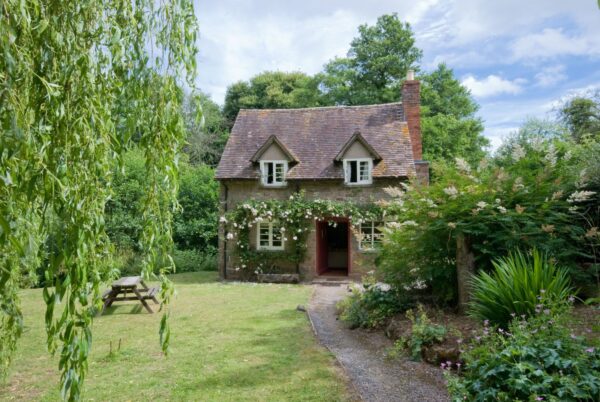
I know people who bought the ‘perfect chocolate box cottage’ in a ‘sleepy’ village but found the church to be similar! They moved to the suburbs of a city to attend a more ‘lively’ church.
Similarly a friend moved to a town where he could help a local youth group that was in need.
- e) Maintenance and energy costs
Often not considered, but the high cost of energy should be factored in. A larger or older house, will cost more to heat. If this is your chosen house, then budget for upgrades such as better double glazing or insulation.
The quintessential thatched cottage may cost you typically £1,200 a year to insure and tens of thousands of pounds to renew the thatch!!
You should consider and budget for immediate essential repairs but also the on-going maintenance which may drain your income, particularly if you are retired or retiring.
Similarly consider the garden. A large landscaped garden may be very attractive, but will demand time and money to keep it looking its best.
You may love gardening and aim to spend lots of time there but if not, perhaps a ‘manageable garden’ should be on your list.
- f) Other factors
This list is almost endless and again different factors may be listed as ‘essential’ or ‘would like’ for different people, or may not appear at all.
Consider the following (and of course, add your own):-
– Garage, parking for all the family’s cars, parking for a motor home, caravan or boat.
– Storage, perhaps in the loft, garage, garden shed etc.
– Level plot, garden, walk to the shops or bus stop. Wheelchair friendly or accessible.
– Secluded; or close to other homes (where your children are more likely to make friends).
– Nice views of the countryside, sea etc.
– Elevated so as to be above the local flood plain!
– Local events. You may overlook fields in Glastonbury but once a year they will be filled with festival goers!
– Pets. Cats ideally need a home away from a main or busy road and room to roam.
Dogs will need walks and nearby common land or available fields is likely to be a ‘must’.
I hope the information above is ‘food for thought’ and wish you ‘happy house hunting’.