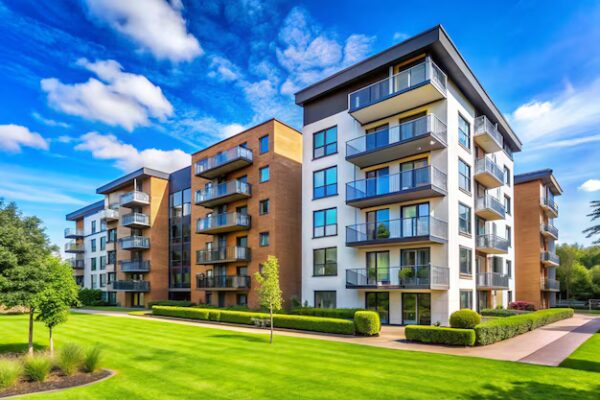
Selling your flat or apartment
If you are selling a leasehold flat (sorry ‘apartment’) then you will also need to provide your conveyancer with the following additional documents: –
- A questionnaire Leasehold Information form (TA7).
This will be provided by your conveyancer and gives details of who owns the freehold building, the ground rent payable and the service charge or maintenance and other information about the management of the building.
- A ‘Leasehold Information Pack’
You must obtain this from the freehold owner or managing agent and should include the industry standard LPE 1 form.
You will likely have to pay for this (Often £200 or £300) so arrange this as soon as a sale is agreed.
(If you own the freehold with another flat owner(s) then, you can together fill in the LPE 1 form and provide the details of the service charge and building insurance arrangements).
- The original lease of the flat if you have it. You should have received this when you purchased the flat, unless your conveyancer stored it for safekeeping.
(It’s a good opportunity to check that the lease has at least 85 years left to run. (Many leases are granted for 999 years but some for only 99 or 125 years). Flats with leases with less than 85 years (or so) left, will be very difficult to sell).
However, the law provides a right to extend the lease (paying the appropriate value) but first try to negotiate an extension with the freehold owner direct.
Use the Leasehold Advisory Service or employ a surveyor experienced in negotiating the extension of leases.
Of course if the freehold owner is the company (often the ‘management company’) which is owned and run by you the flat owners, then the extension of the lease should be quick and inexpensive.
- In addition to the above, you should provide your conveyancer with all the information and documents relating to the management of the block of flats or converted building
Here is the complete list: –
– Leasehold Information form TA7 (see above).
– Leasehold Information Pack and form LPE 1 (Leasehold property enquiries form).
– Ground rent statements, service charge statements, insurance details and details of any major works planned or in progress.
You should already have these but if not, obtain these from whoever manages the flats*.
Selling a flat in a ‘High Rise’ block
Following the Grenfell tragady, buyers will (obviously) want to know if there is any cladding on the building that could present a danger.
Under the Building Safety Act 2022, buildings over 11 meters tall with unsafe cladding, must be ‘remediated’ (the cladding removed) by 2029.
So, in addition to living with the danger pending remediation, buyers will be concerned that they may have to pay a share of the costs of remediation (which is usually many thousands of pounds!).
Here then, are the questions the buyer will want the answers to: –
1. Is the building over 11 meters tall?
NO – Then the Building Safety Act won’t apply, although your buyer may still be concerned if the building has combustible cladding.
YES – (go to the next question).
2. Does the building have cladding (or other wall system) that is, or might be highly combustible and therefore dangerous?
YES – (go to the next question)
3. Does the building have an EWS1 certificate (External Wall System) stating that there is no combustible cladding (or other wall system) and so no risk to the residents?
YES – If a qualified surveyor has certified that there is no danger, then your buyer will be reassured.
NO – (go to the next question).
4. Has the developer agreed to cover the cost of remediation (removal of any dangerous cladding?
YES – Then your buyer should not have to bear any cost.
NO – (go to the next question).
YES – Then neither you or your buyer should not have to bear the cost.
NO – You or your buyer could be liable for a share of the cost of ‘remediation’ (removal of any combustible cladding).
It is IMPORTANT to provide the buyer with all the information you have, including notices or updates from the freehold owner (or managing agent).
Your buyer can then make an informed decision.
(IF you are liable to contribute to the cost of remediation and there is an estimate, then you could reduce the purchae price to cover this).