Surveys
One of the few remaining Latin legal phrases is ‘Caveat Emptor’ which means ‘(Let the) buyer beware’.
In some countries, sellers are obliged to provide as much information as possible when selling a property. Not so here (although this is changing).
It is up to YOU the buyer, to inspect the property and find out as much as you can about it. This includes the state and condition of the property.
So unless you are buying a new property with a warranty, or are qualifed to inspect a property, it is ESSENTIAL that you commission a survey report.
You will have NO recourse to the seller if after completion, you find some defect in the property.
Choosing a surveyor
The surveyor you instruct to survey the house or flat you are proposing to buy, should be a member of the Royal Insitute of Chartered Surveyors. (You should see the RICS logo on notepaper and in advertisements).
(There are other professional organisations but these are less known).
As with all professionals, a personal recomendation is the best. If you are instructing a local conveyancer, he or she will probably know a good surveyor.
You should have a written quote for the cost of the survey and the type of survey you have chosen (see below).
You will be required to pay the survey fee before the survey is carried out.
Do bear in mind that a self employed ‘one man band’ surveyor may not have to charge VAT, whereas a large firm of surveyors will certainly have to.
NOTE the VALUATION required by your mortgage lender is NOT a survey and is for your lender’s benefit only.
Although different organisations give their surveys different names, there are broadly three types of survey.
The RICS describe their 3 ‘levels’ of survey as follows: –
Level 1 – Condition Report
- Best for: New-builds or modern homes in good condition.
- Scope: Provides a basic overview of the property’s condition, identifies urgent defects, and highlights potential legal or safety risks.
- Limitations: Does not provide detailed advice on managing defects or extensive analysis.
- Purpose: Offers reassurance for straightforward properties and is typically the lowest-cost survey.
Level 2 – HomeBuyer Report
- Best for: Most conventional homes, especially those built after 1900 and in reasonable condition.
- Scope: Includes a more detailed inspection of visible parts of the property, such as roofs, walls, windows, doors, and services. Uses a traffic-light system (green, amber, red) to indicate severity of issues. Can be conducted with or without a valuation.
- Purpose: Provides a balanced level of detail, identifies defects, and offers advice on repairs and maintenance. It is the most popular choice among buyers.
Level 3 – Building Survey
- Best for: Older, larger, or non-standard properties, including listed buildings or homes with extensive alterations.
- Scope: Offers a comprehensive inspection of the property’s structure, materials, and condition. Includes detailed analysis, estimated repair costs, and advice on long-term maintenance.
- Purpose: Essential for properties showing signs of wear, movement, or long-term neglect, providing the most thorough assessment.
Other types of ‘survey’
Valuation
As advised, your mortgage lender’s valuation is NOT a survey.
The valuation is required by your mortgage lender to make sure the property you are buying is worth the price agreed.
It is therefore very limited although should itentify major issues that would affect the property’s value (and so the mortgage lender’s ability to sell it should they be forced to repossess it).
Structural Engineer’s report
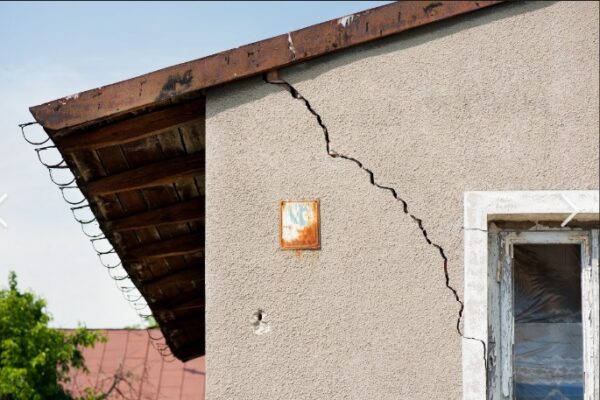
Sometimes a surveyor will identify a serious defect such as a crack in the property. (This is usually evidence that the property has suffered subsidence).
He or she will then recommend that a Sturctural Engineer’s report be carried out.
If this is the case with the property you are proposing to buy, I recommend that you approach the estate agent with a copy of the survey report and ask that the seller commissions and pays for the structural engineer’s report.
(If the seller refuses, I would ‘walk away!).
I would also expect the seller to pay for any repairs recommended by the structural engineer’s report, or reduce the price to cover the cost of repairs.
NOTE that your mortgage lender will have to be informed and they will ask their valuer to advise.
They may well recommend that part of the mortgage advance be ‘retained’ by them until the recommended repairs are completed.
This means that you will have to pay for the repairs ‘up front’ and then apply to your lender for payment of the retention.
NOTE also, structural repairs will almost certainly require building regulation approval and your lender will want to see the certificate before releasing the retention.